The Donjon de Vez, a feudal jewel in the Pays de Valois, classified as a “historic monument” and awarded the “remarkable garden” label, will reopen its doors on May 2, 2026. It will welcome the public with a new program of events and activities for young and old.
This year, the Donjon de Vez invites you to two exhibitions.
From May 2 to September 6, 2026, the ” Regards sur Jehanne d’Arc ” exhibition will reveal new secrets about this emblematic figure in the history of France and the Valois region.
Valois welcomes the Mediterranean
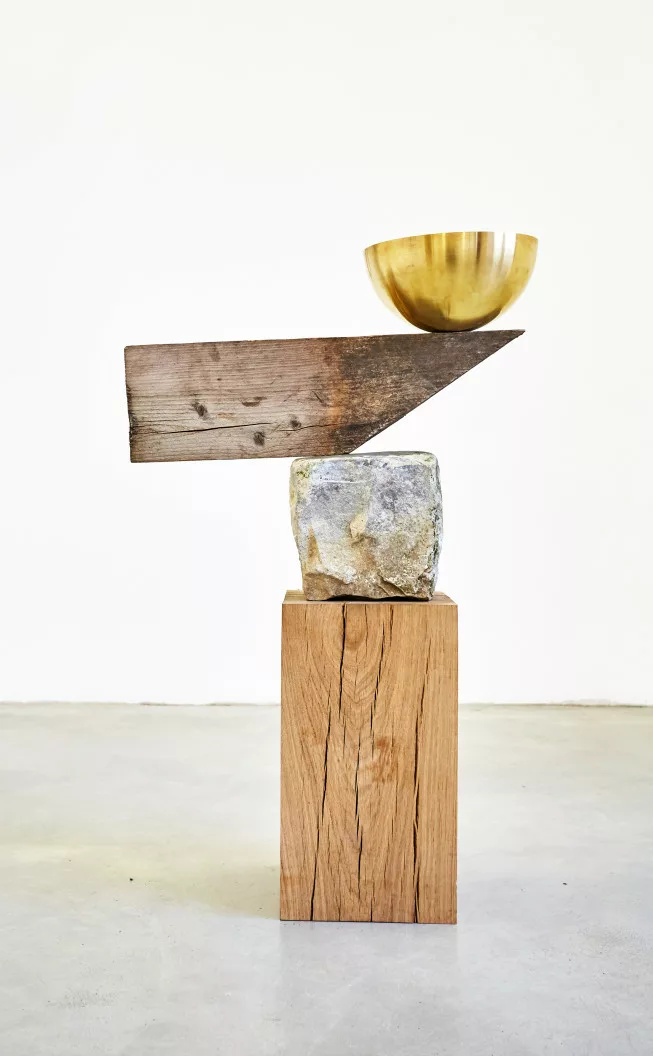
Then, from June 13 to November1, 2026, the Donjon de Vez will host works by Edgar Sarin. Edgar Sarin is a young painter-sculptor born in Marseille in 1989. Trained as an engineer, nothing suggested that he would one day move into the world of contemporary art.
He created his first work at the age of 26, winning the Emerige Revelation Prize in 2016 and the Sculpture Prize of the Académie des Beaux Arts – Institut de France – Pierre Cardin, in 2024. He is the founder of the research group La Méditerranée. This working group addresses all questions relating to the exhibition as a space for exploring objects and people. La Méditerranée designs evolving exhibitions in which the initial representation is transformed into a completely different exhibition on arrival.
From Mediterranean amphora to “Pacific” amphora
Always in the Mediterranean spirit, Edgar Sarin is fascinated by certain forms that have survived the centuries, and in particular the amphora. The amphora, a container for storing and transporting oil, wine or other materials, was also a measuring instrument. What’s more, its judicious shape facilitated vertical stacking on boats and easy handling. His attachment to the amphora gave rise to his beautiful work“Pacifique” in Le Havre, a 10-metre-high repetition of amphorae, again by the sea.
The amphora, a product of a time when we made with little, with terracotta, led him to use all natural materials (wood, straw, stone, marble, clay, etc.). He understands these materials in their immediate environment. He has a very personal way of creating his installations, as if he were balancing and unbalancing, like a tightrope walker.
Edgar Sarin shapes materials with care, giving them body, moving by their form, their consistency, their fragility or their strength. He interacts with materials with all the magic of a tightrope walker, employing simple, measured gestures. He is moved by the form of his work, considers the spirit of the place, moves away a little, then returns to his sculpture, all to make it accessible to as many people as possible.
Then he lets his work blossom freely.
I think a lot about the few seconds it takes for the spectator to approach the work. Nothing must interfere with this moment of freedom and discovery before intellectualization.
Photo credits: Edgar Sarin and Michel Rein Paris Bruxelles -JL 76actu